This is an essay about walking during the pandemic.
I’m certainly not the first to write about the topic. Far more clever folk than I have reflected on how the pandemic has helped us to relearn the the “lost habit of walking,” turned us into “Victorian children” needing daily air and exercise, and presented us with opportunities to see everything old as new again within the 15 block radius of our homes. My own trajectory of pandemic walking is incredibly typical. I initially embraced my walks as a means of maintaining health and sanity, of building routine into formless days and forcing myself out of the house when all of my usual obligations had fallen away. I found new routes – previously unexplored laneways, a local ravine, hidden fish ponds and a graveyard with views of the Fraser river and Mount Baker. Like many others, the first few months of the pandemic were signified by wildlife sightings. Several families of raccoons, an adorable group of baby skunks (which I learned are called a surfeit), baby rabbits, swooping bats, if I timed it right at dusk. And coyotes. It became a running gag for a group of local friends – the coyote sightings posted on the community Facebook page by people who didn’t quite understand that the coyotes have always been here. It would seem that many of us were made to experience where we live on a level we had somehow managed to avoid in the before-times.
I am profoundly grateful that I have my mobility and am able to walk. I suffered a minor knee injury just prior to the first lockdown, and I remember clearly the low grade panic I felt, knowing on some level how important walking was going to be in the upcoming weeks (I doubt I understood that this would actually mean months). I have flirted with athleticism at various points of my life, but walking has always been my constant companion and one of my great loves. Luckily, the injury wasn’t serious and I was able to build back up to a regular routine. I am also grateful to live in a place conducive to walking, with tree-lined streets, adequate sidewalks, access to a small patch of woods and the aforementioned views of a river and mountains. So please believe me when I tell you that I am still grateful for these things, but am also so, so sick of walking — of what Jenny Singer hilariously refers to as the “year of nothing but dumb little walks.” As it turns out, at least part of my love of walking is tied to my love of seeing new places and things, ideally in new locales.
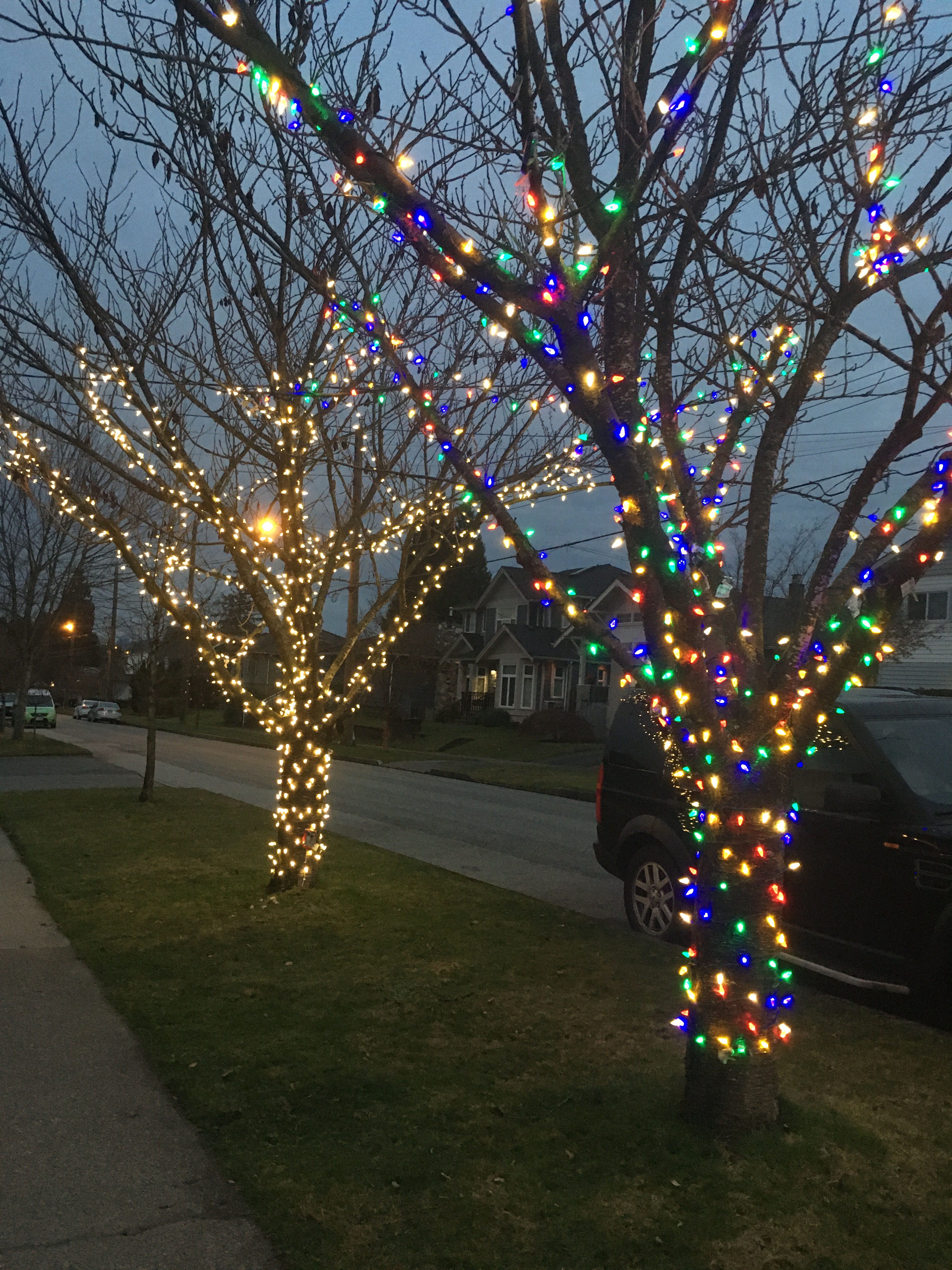
Thankfully, I discovered a new love this winter — Christmas lights. I’ve never not liked Christmas lights, but this year I’ll admit to becoming obsessed with them. The lights went up early, and stayed up well past what would normally be considered acceptable. I have no empirical evidence to support this claim, but it feels like more people put them up. They came in all sorts of hues, shapes and sizes. They ranged from single, humble strings to extravagant, garish displays. I had room in my heart for all of them. I fell deeply in love with some in particular. A tree decked out in pastel coloured lights that seemed impossibly warm and inviting. Some newfangled things called “starlight spheres” — big bold colourful balls that hung from tree branches much like indoor ornaments would. And my two favorites – trees halfway down my street, trunks and branches blanketed in light. The white ones went up first, their brightness a brazen reply to long winter nights. I was genuinely delighted when the second tree was similarly accessorized, but with colour. Together they made a handsome pair, and I did not take them for granted, making sure to lay eyes on them every night, even if only meant stepping out onto my front porch to do so.
When I think about the Christmas lights and why they were important to me (above and beyond the obvious benefits of seeing light during our darkest days) I think about Ellen Cushing’s fantastic essay “Late-Stage Pandemic is Messing With Your Brain.” Cushing reflects on the mild cognitive impairment that results from experiencing prolonged bouts of boredom, with an underlying exposure to stress. Our brains revel in novelty — the “environmental enrichment” that comes from interacting with different people and places over the course of our day-to-day lives. I think the Christmas lights helped fulfill this deeper function. I couldn’t sit in a coffee shop and work while people watching, but I could develop a mental map of my surroundings based on the lights and lights alone, and push myself further afield to locate new entries. As the lights started to go out, my walks became singularly focused on finding the last stragglers, scanning streets and walking routes that would seem haphazard to an outsider but that contained an internal logic all my own.
Unfortunately, the humble Christmas light can only do so much. Even though many of them remained up well into March, I stopped walking, hobbled not by a bad knee, but by a mind dedicated to the craft of unreliable narration, and a body invested in the thoughtful remembrance of traumatic anniversaries. While the dog days of winter are never an easy time, this year was worse than others. Perhaps I can blame late-stage pandemic living for this as well. The loss of the regular routines that serve as at least a partial buffer to an excess and time and space to live with ones thoughts.
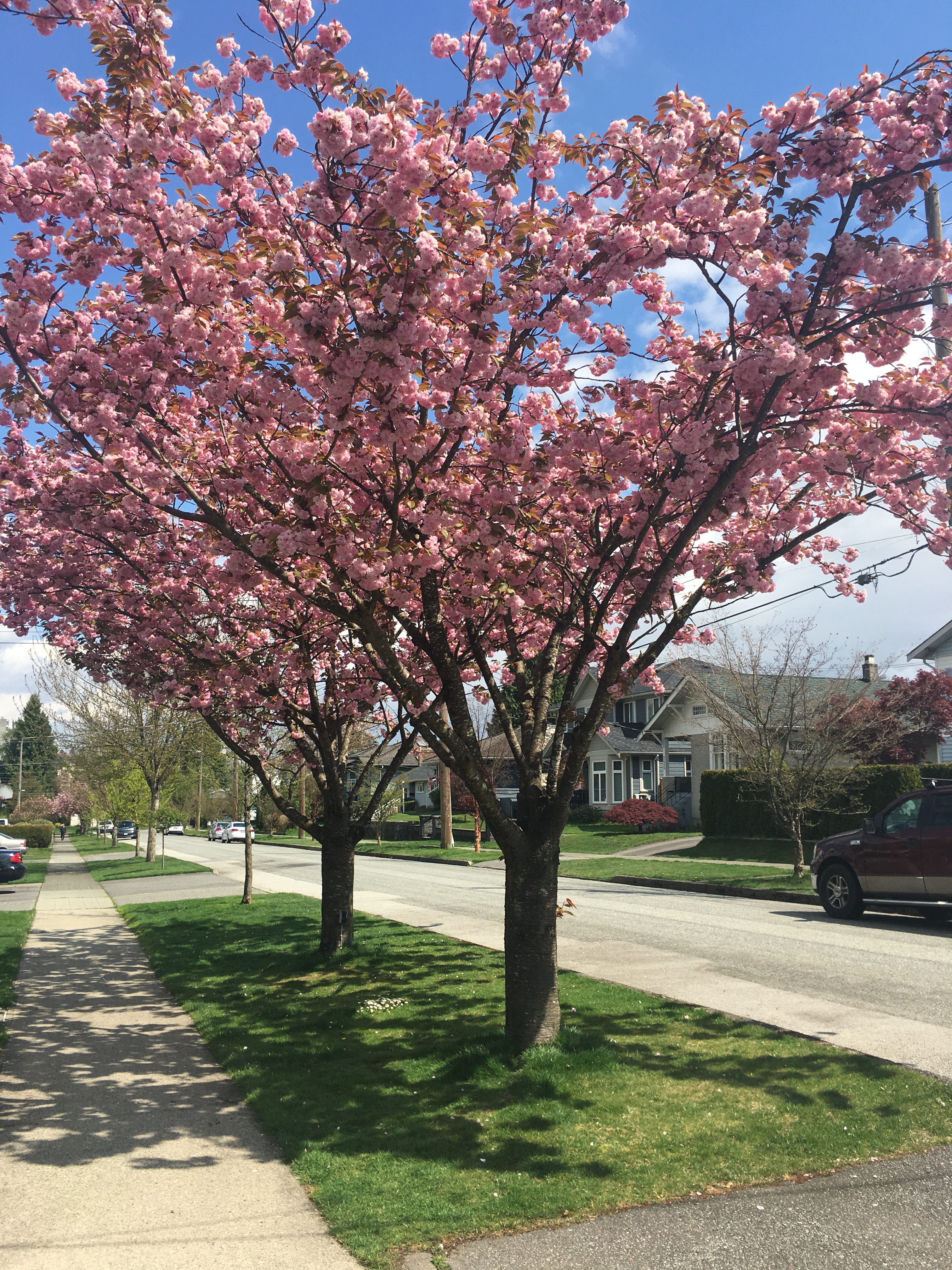
But the pandemic, and the weather, both giveth and taketh away. March passed and winter ended. The days grew longer and we saw the sky. Things settled down in my body and mind, as they mercifully tend to do. I had time and space to dedicate to recovery in a way that felt different, and significant. I listened to music that brought me joy. I met with friends who brought me comfort. One day I found myself mapping out my upcoming year, and paused in realization of the significance of this — of being able to project ahead with a sense of hope and excitement. The trees in my neighbourhood blossomed. I don’t know exactly when the lights on my two favourite trees went out. Probably sometime while I was laid up at home, incapable of opening the front door to check on them. It’s ok though – the bulbs have been replaced by an explosion of pink petals. I don’t know that I ever realized they were cherry blossom trees. I’ve noticed this year. I’ve seen them on my daily walks.
 Threads